Traditional EDI validation focuses on syntax, semantics and content-ensuring that messages are technically correct and that fields contain valid data. However, modern supply chains require a deeper level of control: process validation. This is where automated business rule validation and document reconciliation come into play.
How process validation works in practice
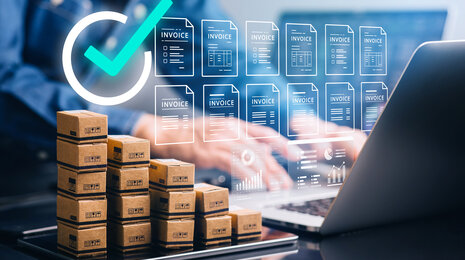
Advanced validation evaluates whether documents within a business process actually match and can be automatically cleared. For example, an invoice can be automatically approved for payment by matching it with a receipt advice. If quantities, prices, and items align within defined tolerances, the system can trigger payment without manual intervention.
Similar logic applies across logistics processes. A despatch advice can be validated against an order to confirm that delivery locations, items, and quantities correspond to what was ordered. In warehouse operations, receipt advice can be reconciled with despatch advice at the line-item level to verify what was actually received.
Handling complexity through automated reconciliation
Real-world scenarios often involve complexity: a single order may generate multiple despatch advices, identical GTINs may carry different batch numbers, or weight-based goods such as meat or produce may require tolerance rules to account for slight deviations between ordered and delivered quantities.
Another common scenario involves substitution rules, where a specific GTIN is ordered but an alternative, pre-approved GTIN may be delivered and automatically accepted during validation.
Multi-step validation workflows are also common. Documents are first matched automatically; if discrepancies occur, a correction document (e.g., a credit note or an adjustment document) can trigger a new reconciliation cycle.
Additional use cases include price verification between price catalogues and invoices, returns reconciliation, promotion price checks in retail campaigns, and many other scenarios, thanks to highly flexible rules that can be adapted to almost any business process involving data exchange.
By automating these validations, companies can reduce manual reconciliation, accelerate financial clearing, improve data reliability, detect discrepancies in real-time, streamline operational workflows, and significantly increase overall process efficiency across the entire EDI process chain.